-
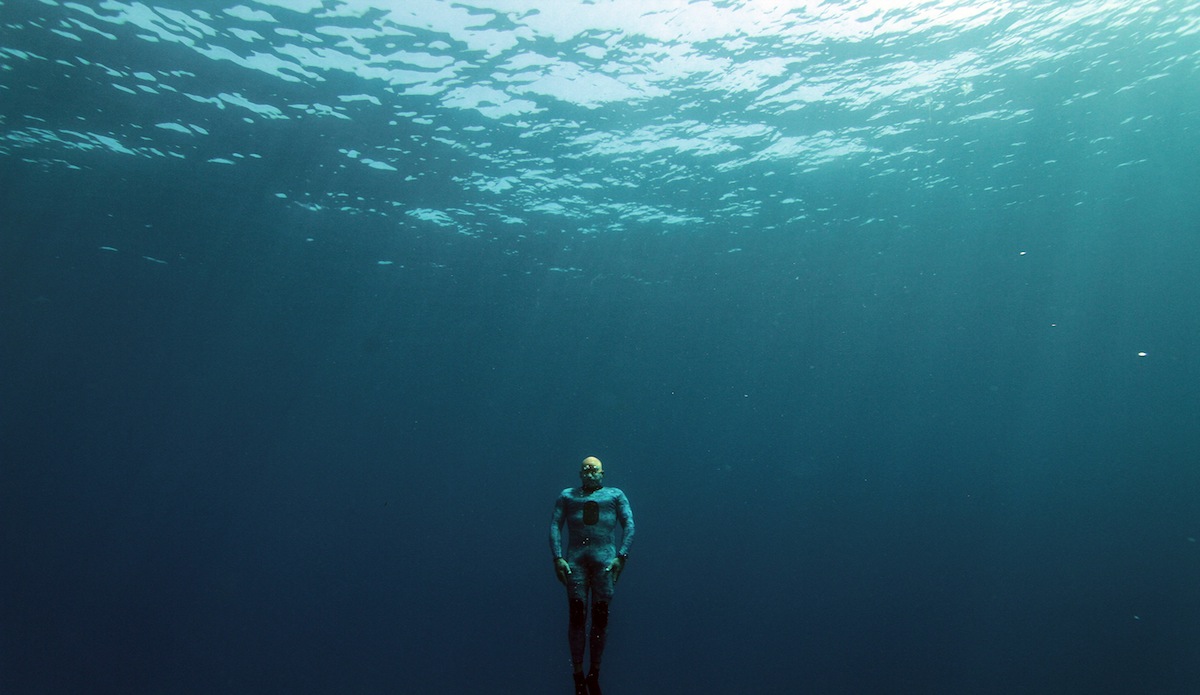
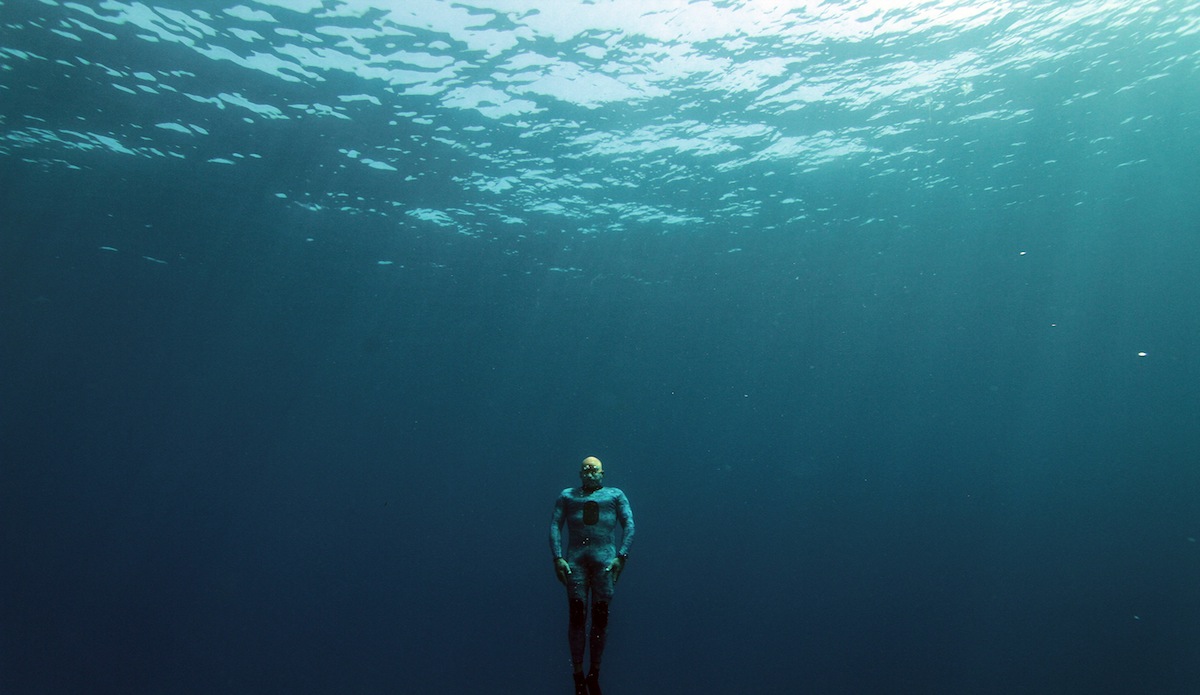
“From birth, man carries the weight of gravity on his shoulders. He is bolted to the earth. But man has only to sink beneath the surface and he is free” – Jacques Yves Cousteau Photo: Anthony Dooley
-
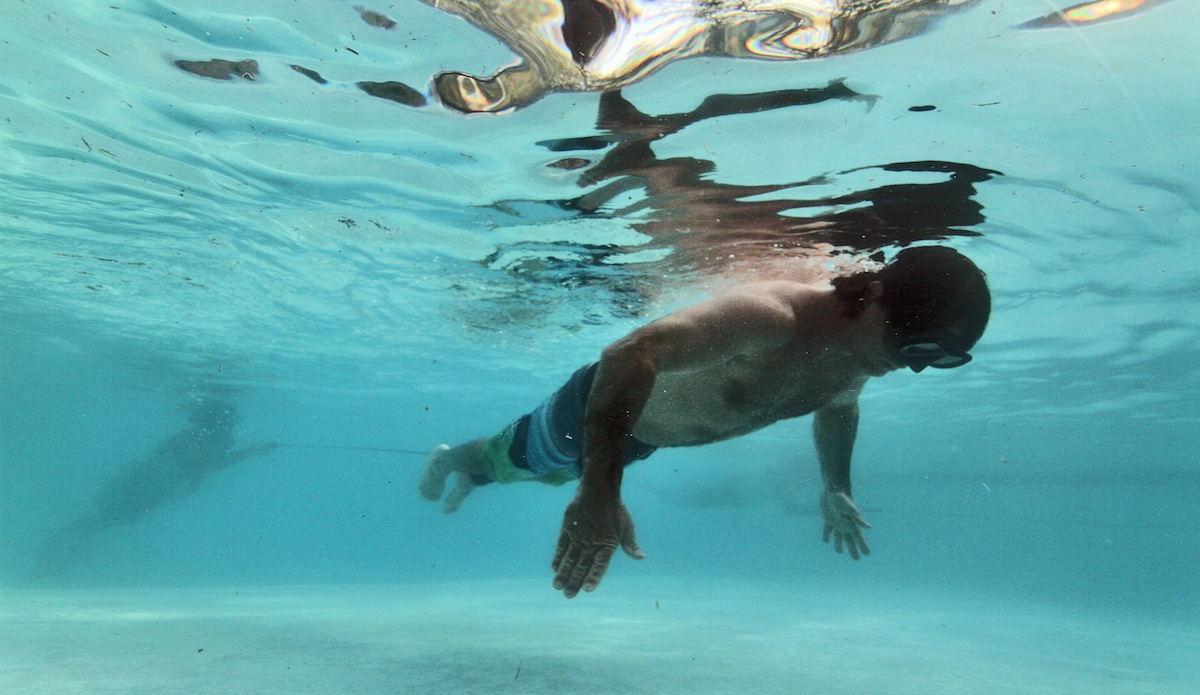
Stuck in a big wave hold down, you have to be able to pull the weight of your board, and then some. So, try pulling your partner across the 20 meter pool, on a single breath, while he’s attached to your ankle by your leash. Photo: Anthony Dooley
-
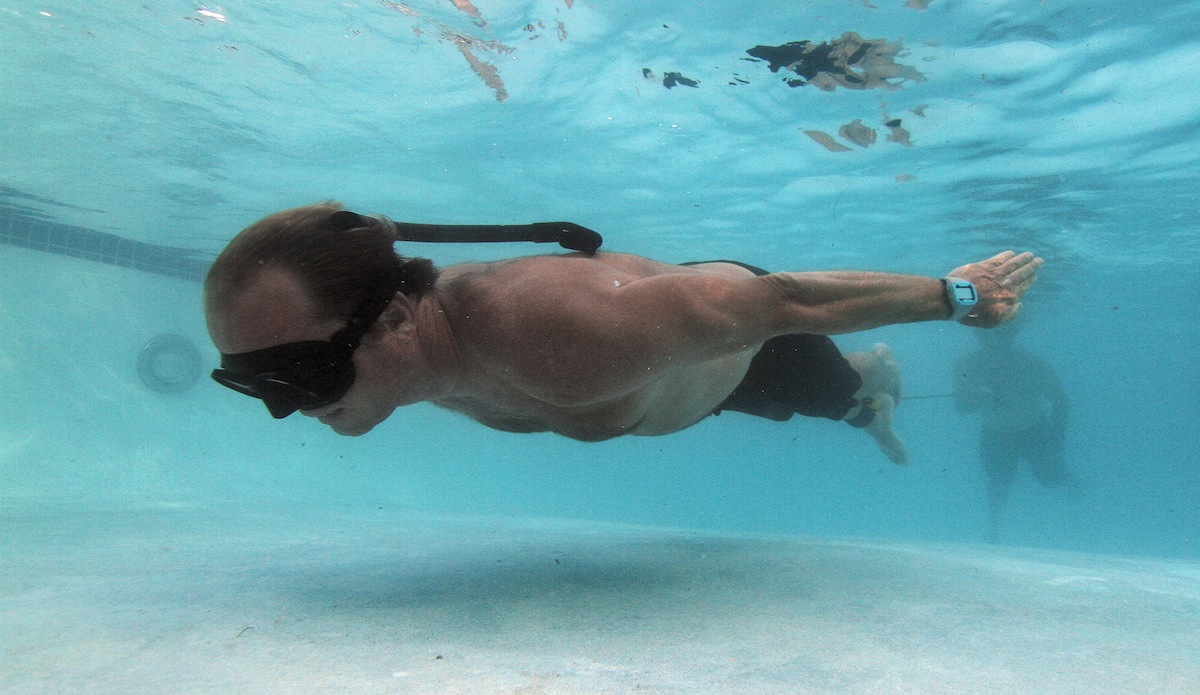
Proper form and relaxation are essential in performing all exercises in the course. Photo: Anthony Dooley
-
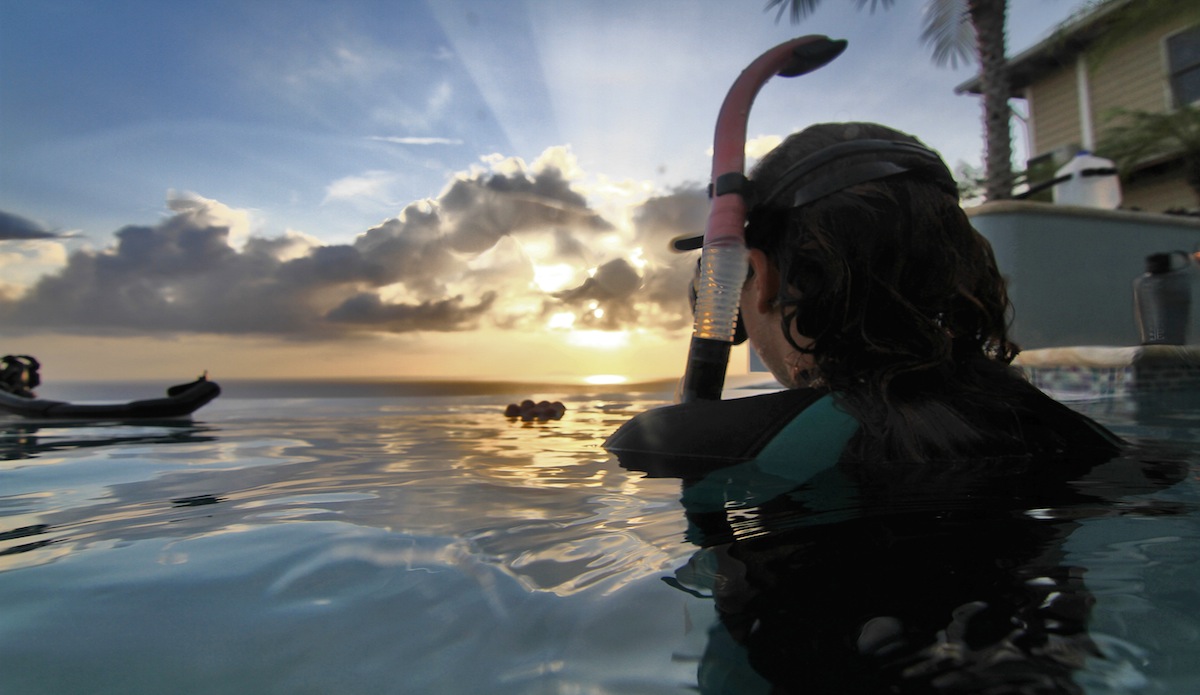
Couldn’t complain about the sunset view overlooking the Caribbean, while breathing up for a two-minute static breath hold. Photo: Anthony Dooley
-
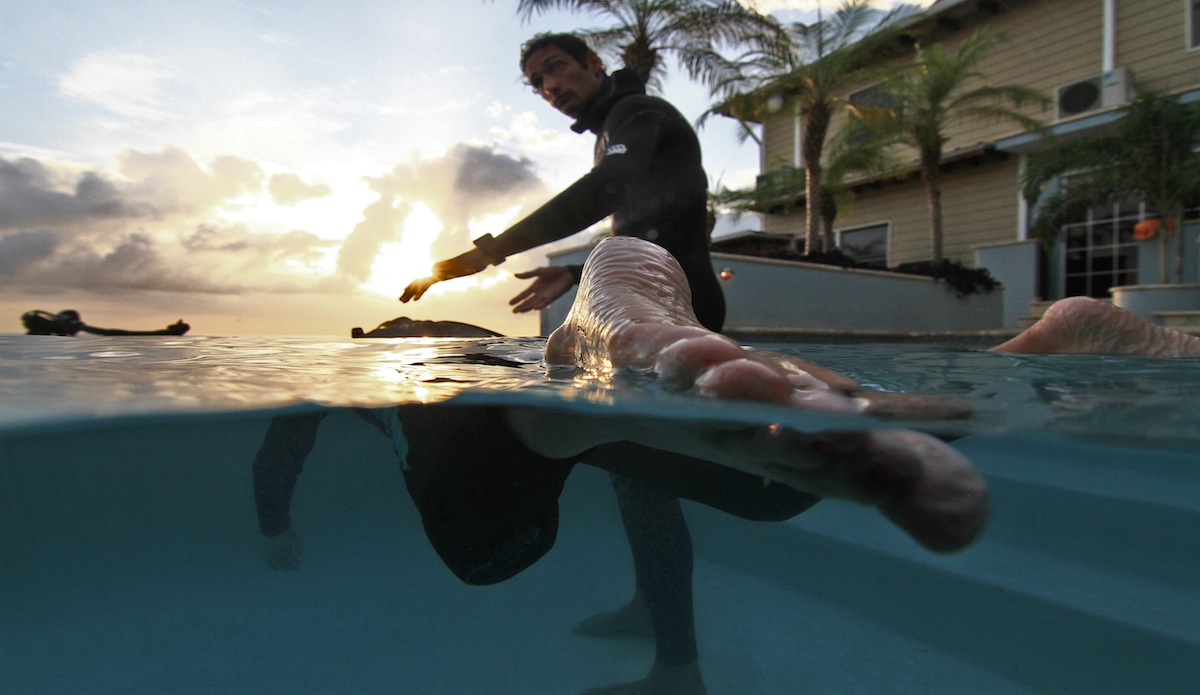
Monitored by your breath hold partner, you are trained for a three-minute static breath hold in the pool. The course educates you on all proper techniques to make it a very feasible feat. Photo: Anthony Dooley
-
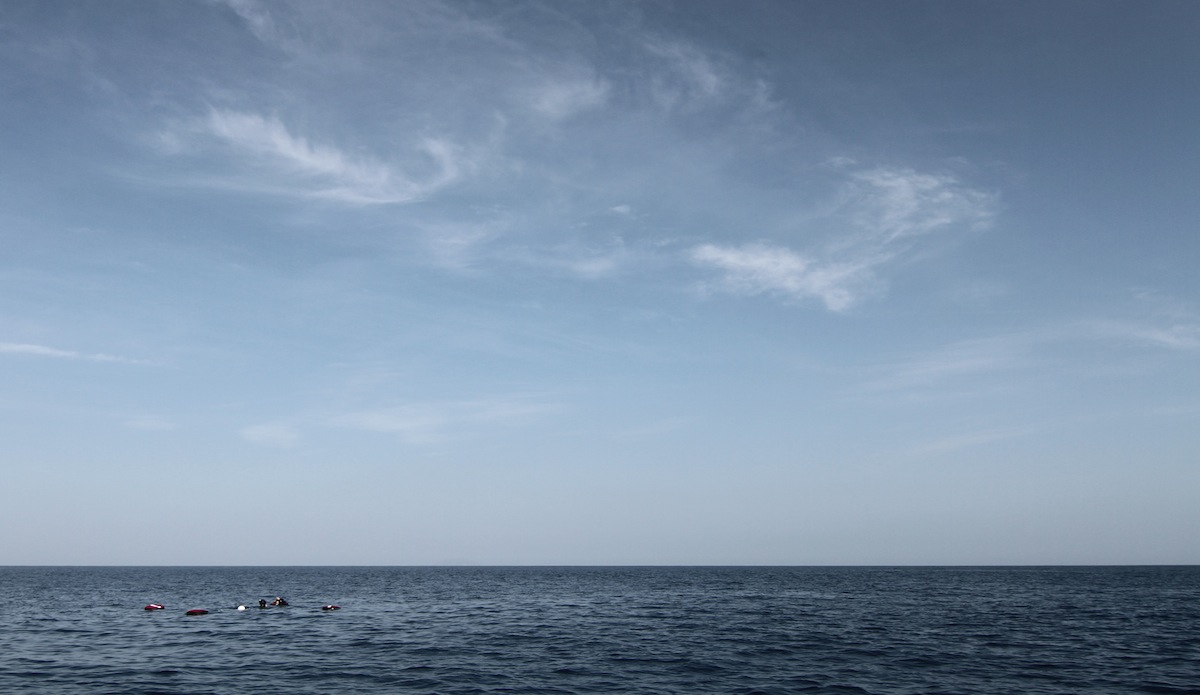
A distant look at the rig set up for the course. The ocean is a big place. Photo: Anthony Dooley
-
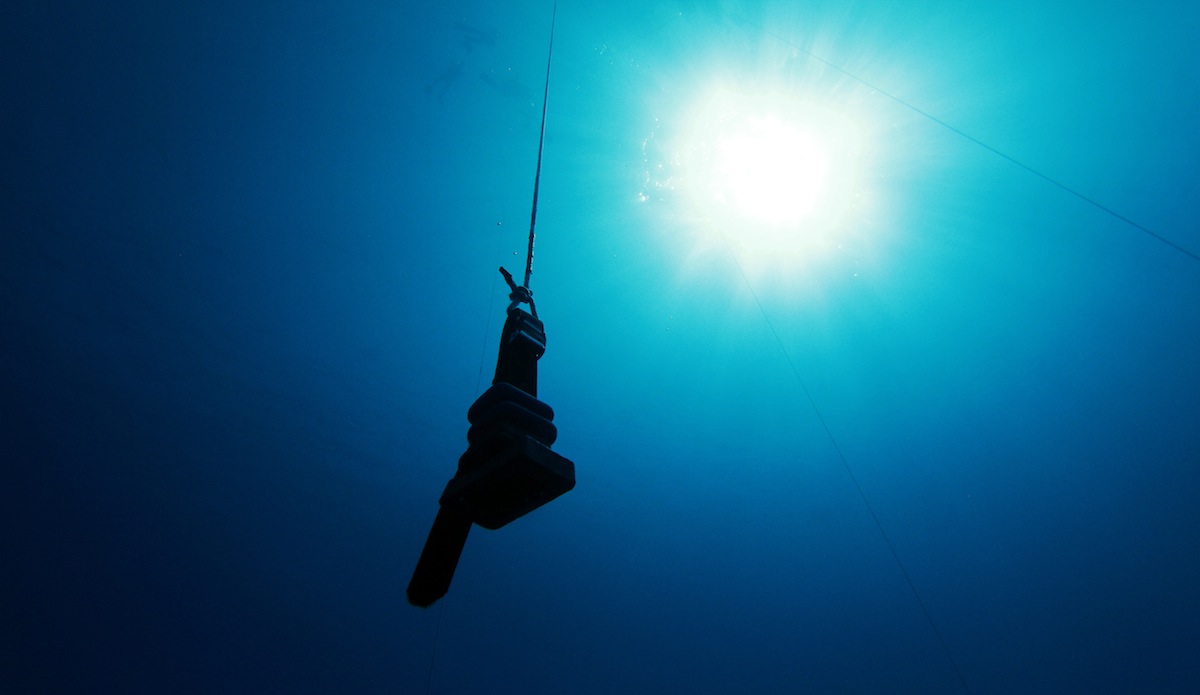
Full depth. 66 feet below the surface the free weight hangs. Photo: Anthony Dooley
-
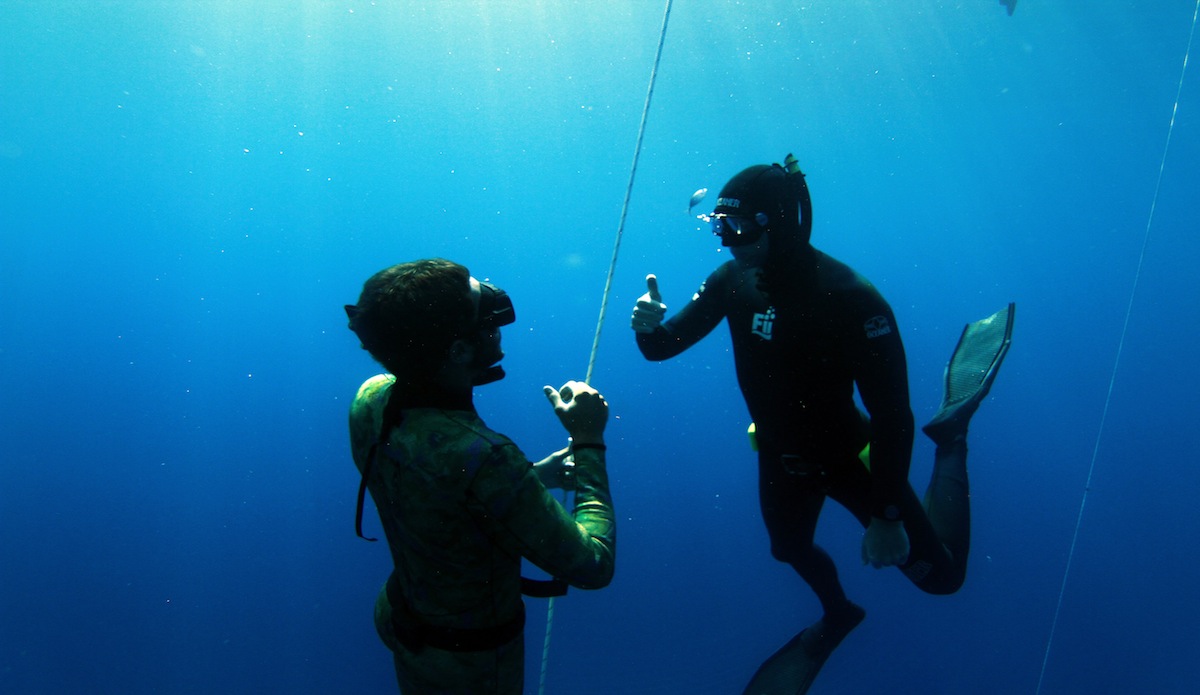
You’re in good hands with the men from FII. Joe Sheridan, pictured right, and Alex Linas were the certified instructors for the course. Photo: Anthony Dooley
-
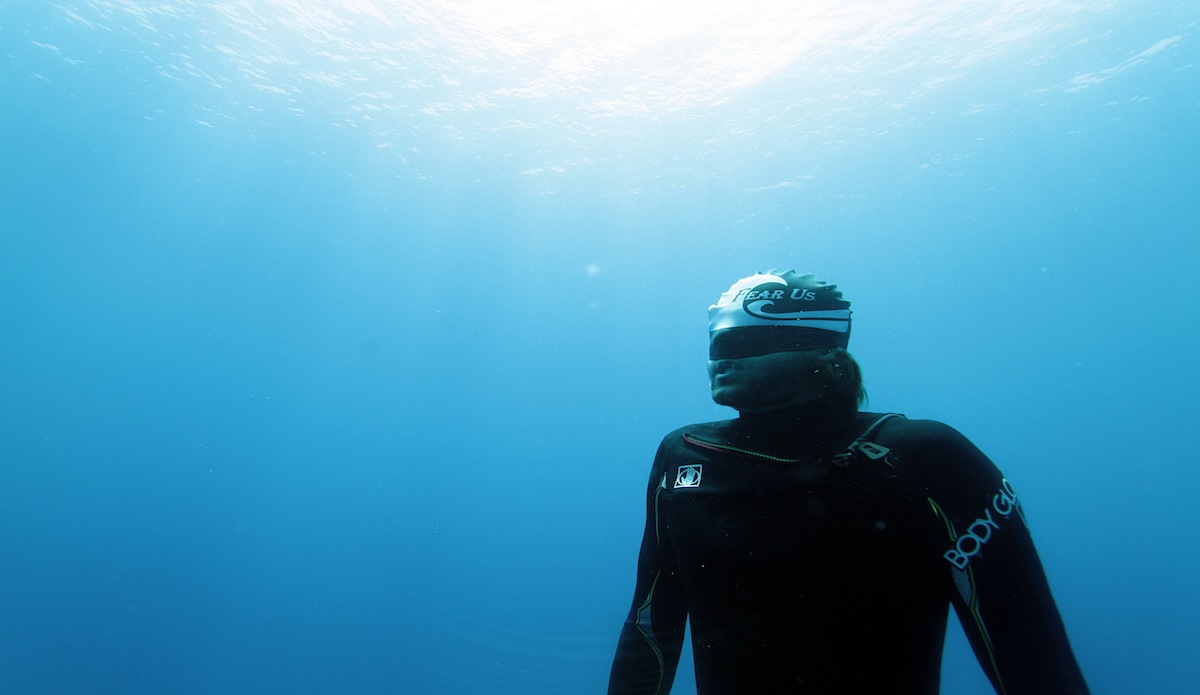
The blindfold in the final training exercises simulates not being able to follow light to the surface. In big wave hold downs, you don’t always know which way is up. Photo: Anthony Dooley
-
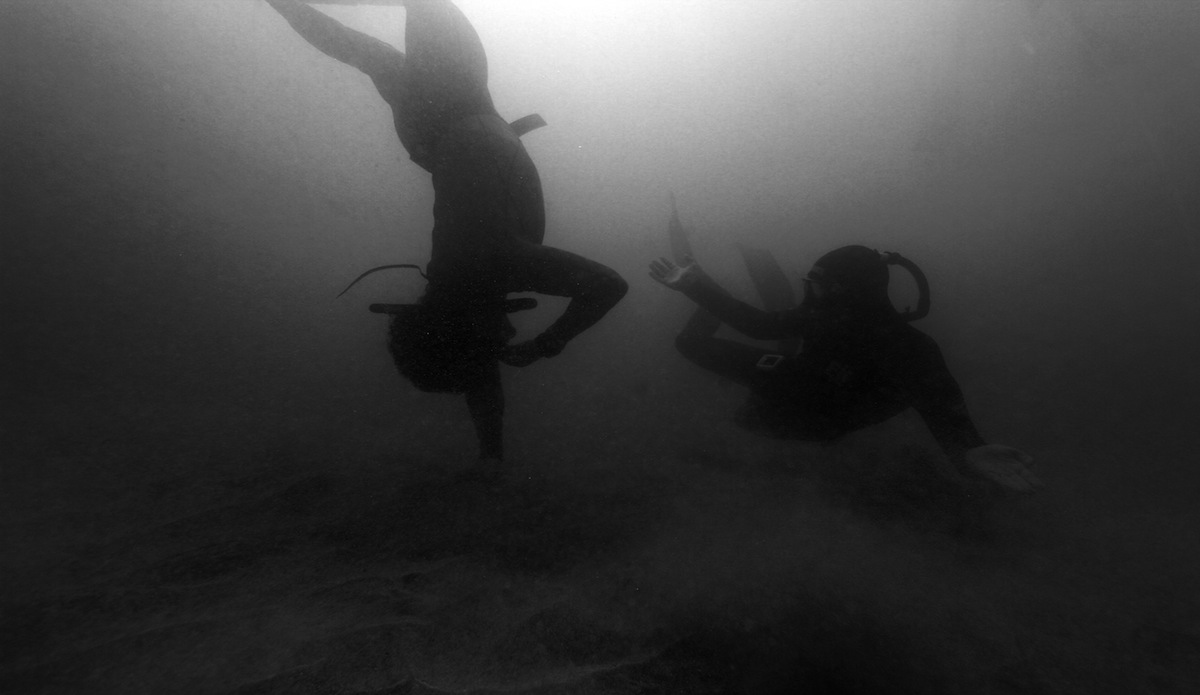
What lurks beneath. Proper equalization was a key training technique for the course to ensure comfort at depth. Photo: Anthony Dooley
-
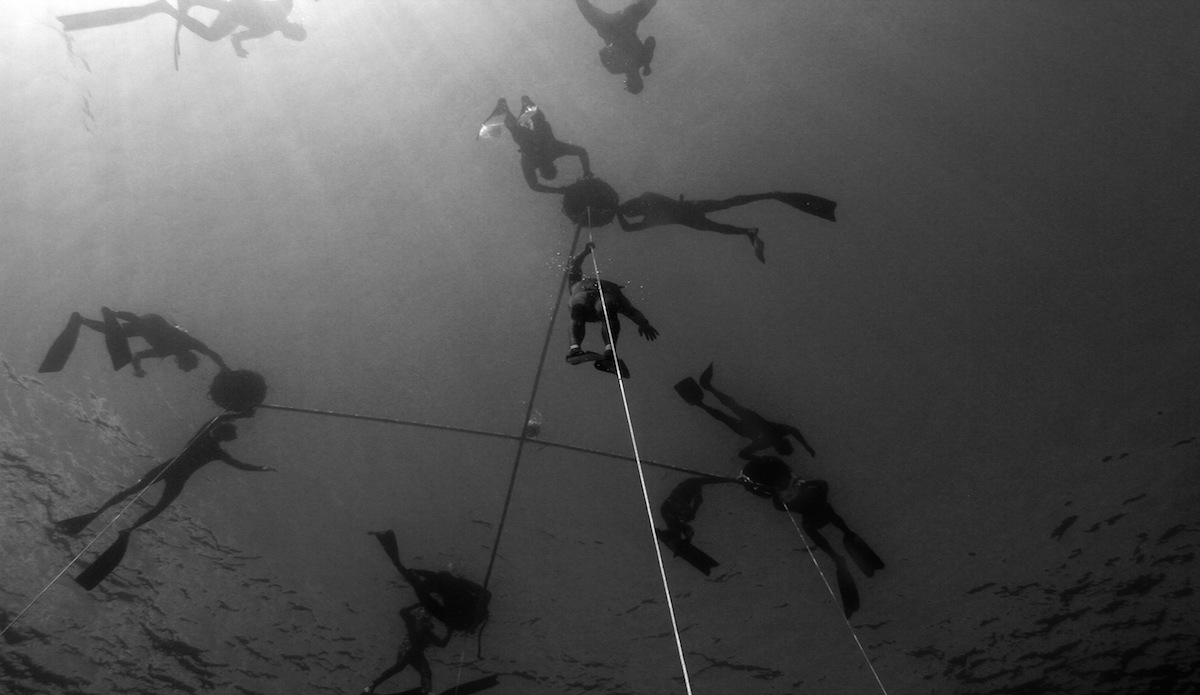
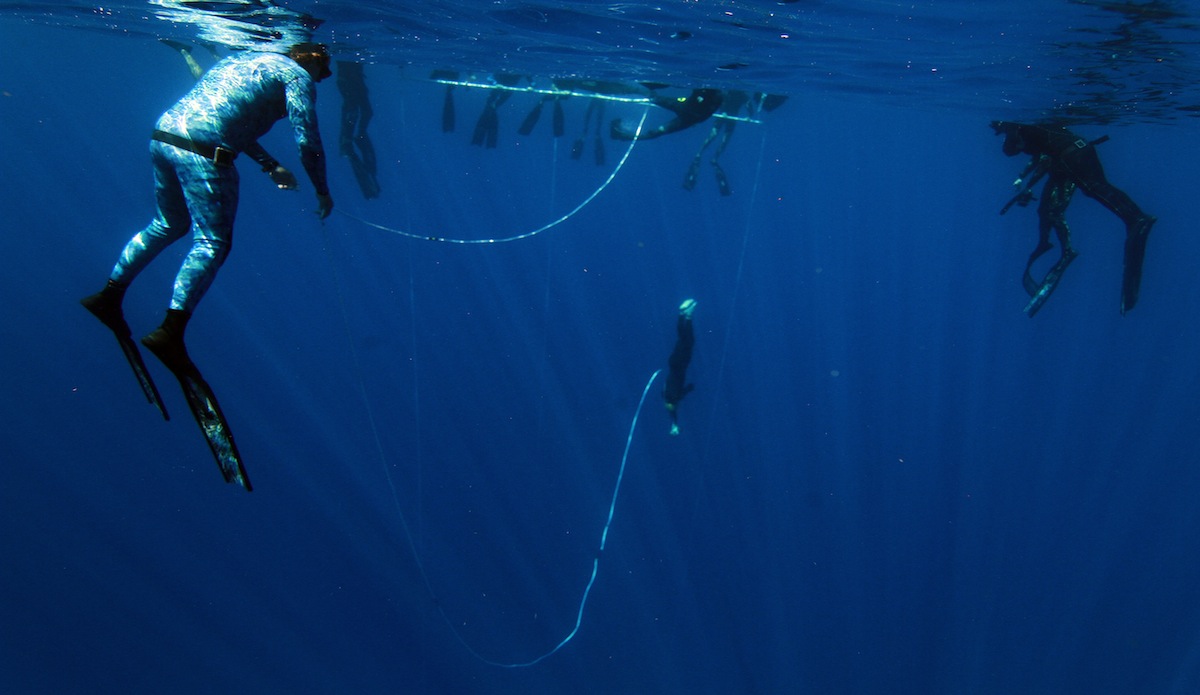
It takes teamwork and a proper safety partner to achieve these goals in the water. This was a group of great waterman in Rincón. Photo: Anthony Dooley
-
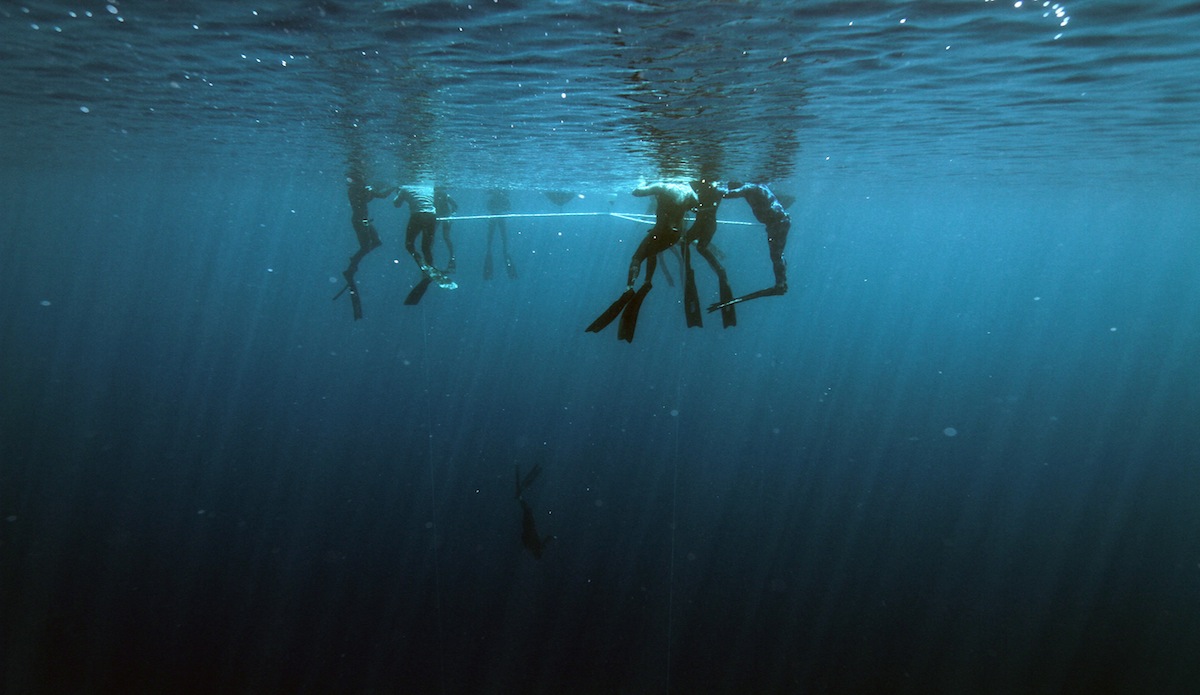
The rig for the course is a series of floats and pipe with line descending down to depth. Teams gather around each float with instructors and safety divers near. Photo: Anthony Dooley
-
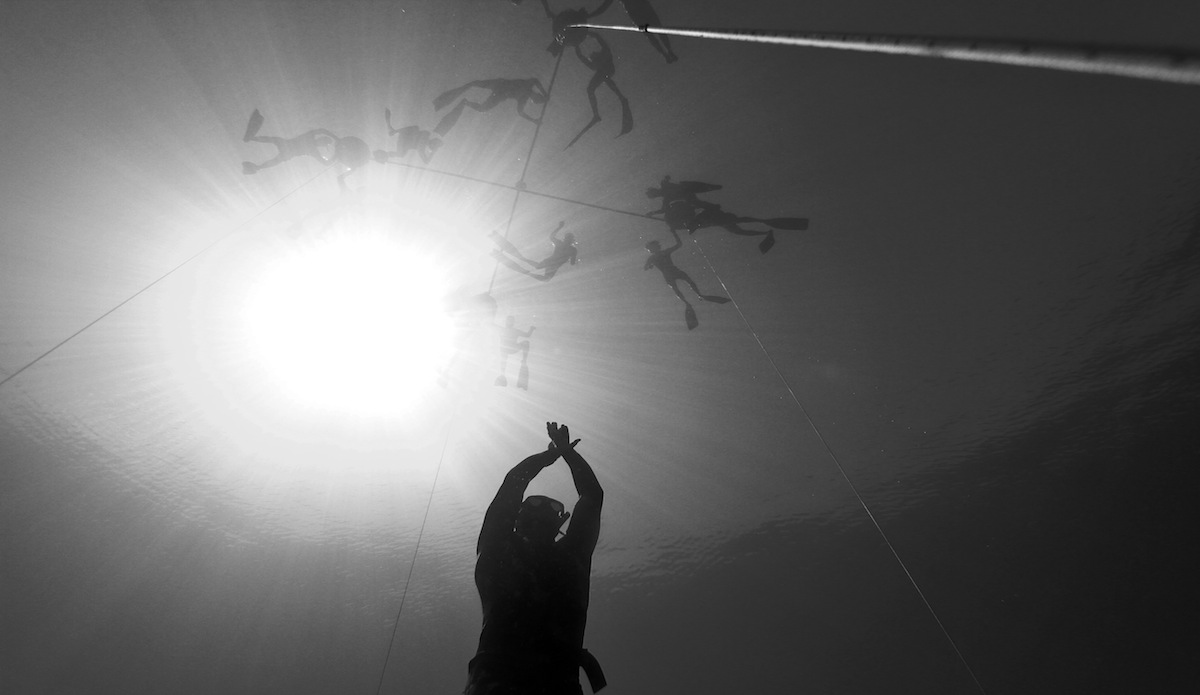
Ascending to the surface after reaching target depth. With each leg kick, getting closer to the surface. Photo: Anthony Dooley
-
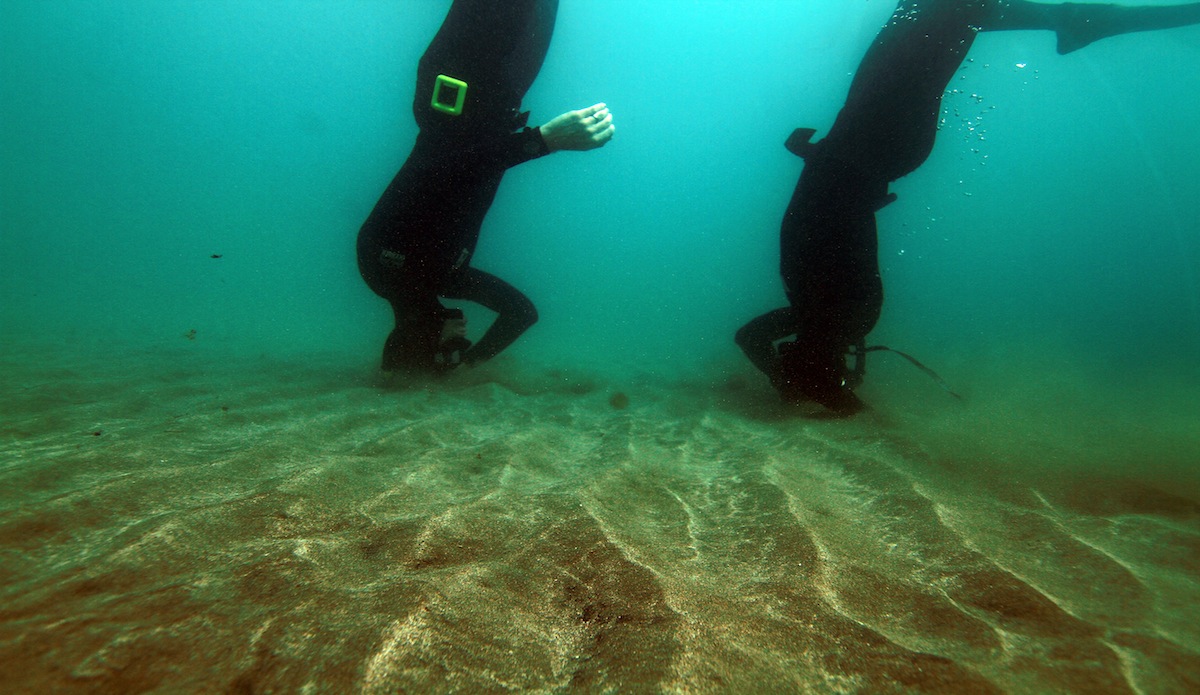
Practicing smooth, wide leg kicks. These will aide in using less oxygen to reach depths and ensure a quicker descent when freediving. Photo: Anthony Dooley
-
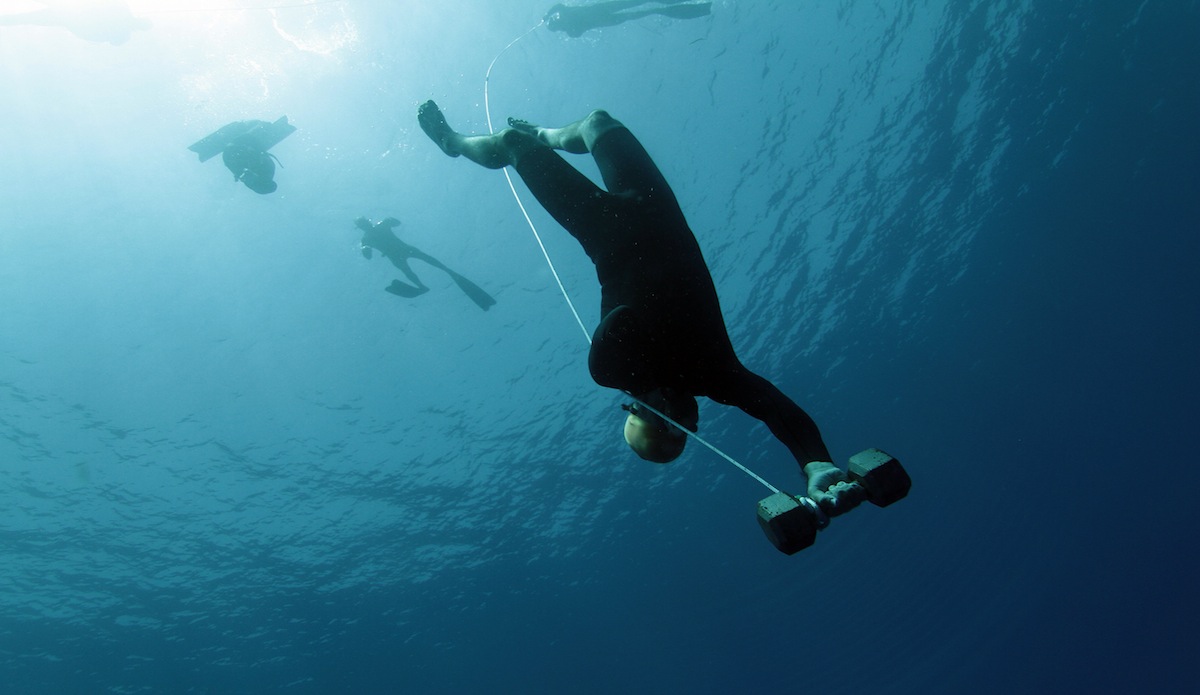
The 25lbs of weight carries you down to 66 feet while a swim cap covers your eyes. Hold on. Photo: Anthony Dooley
-
This exercise recreates the feeling of a hold down and the disorientation that accompanies it. While blindfolded and holding a free weight, you are dropped from the surface. You hit a depth of 66 feet. Then you find your way back up. Photo: Anthony Dooley
-
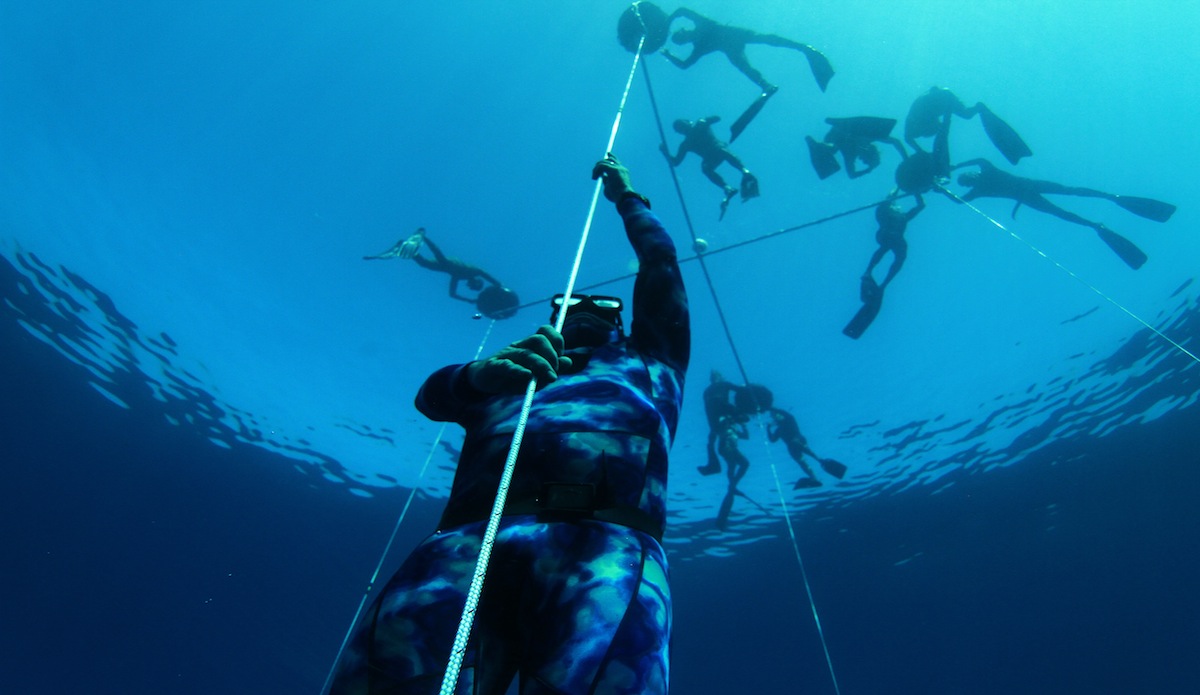
Almost to the rig. A successful depth dive. Photo: Anthony Dooley
-
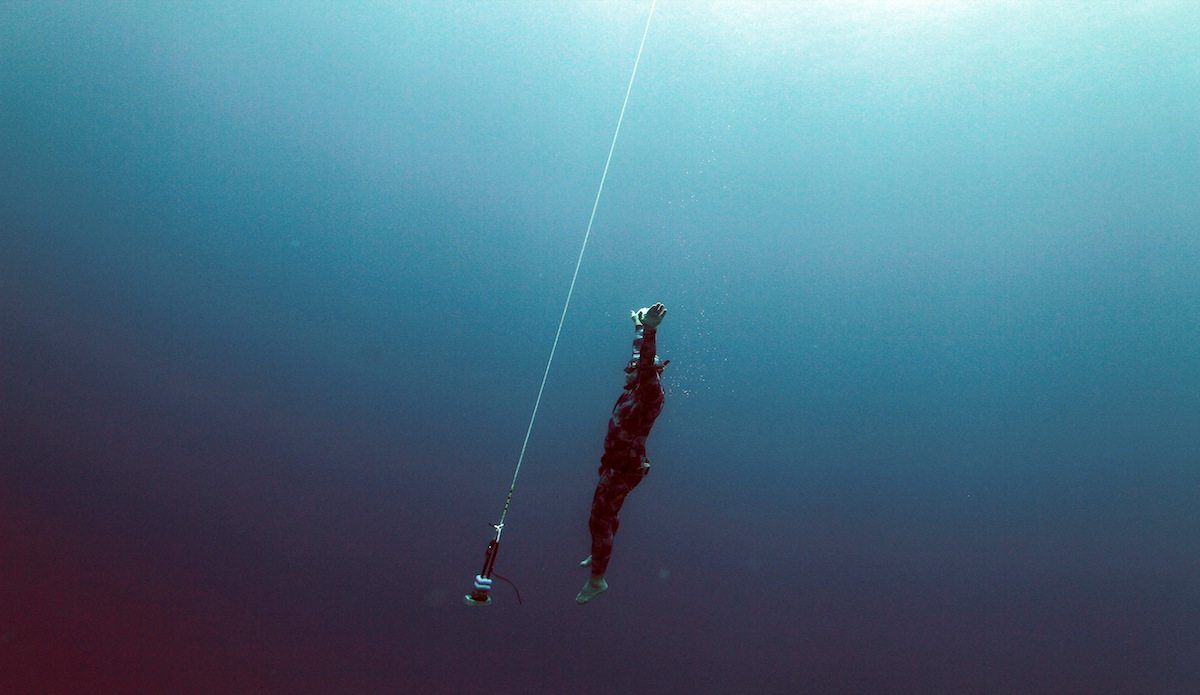
No tanks. No fins. Just you and the sea. Photo: Anthony Dooley
-
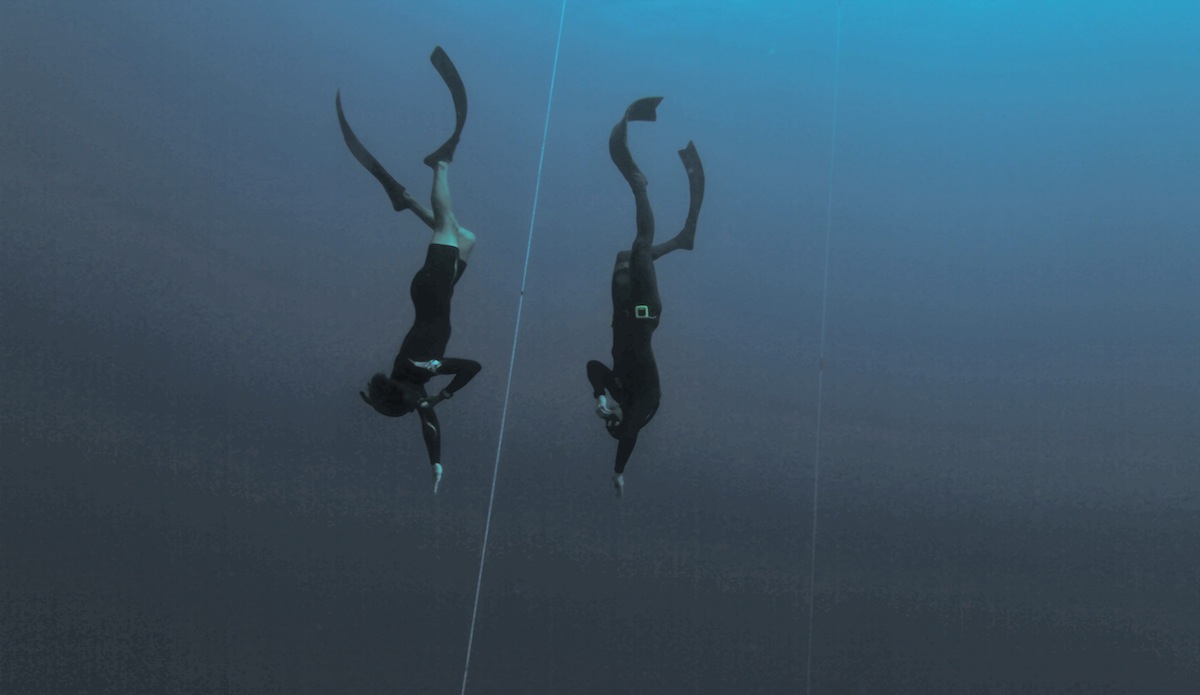
Descending down the line. Photo: Anthony Dooley
-
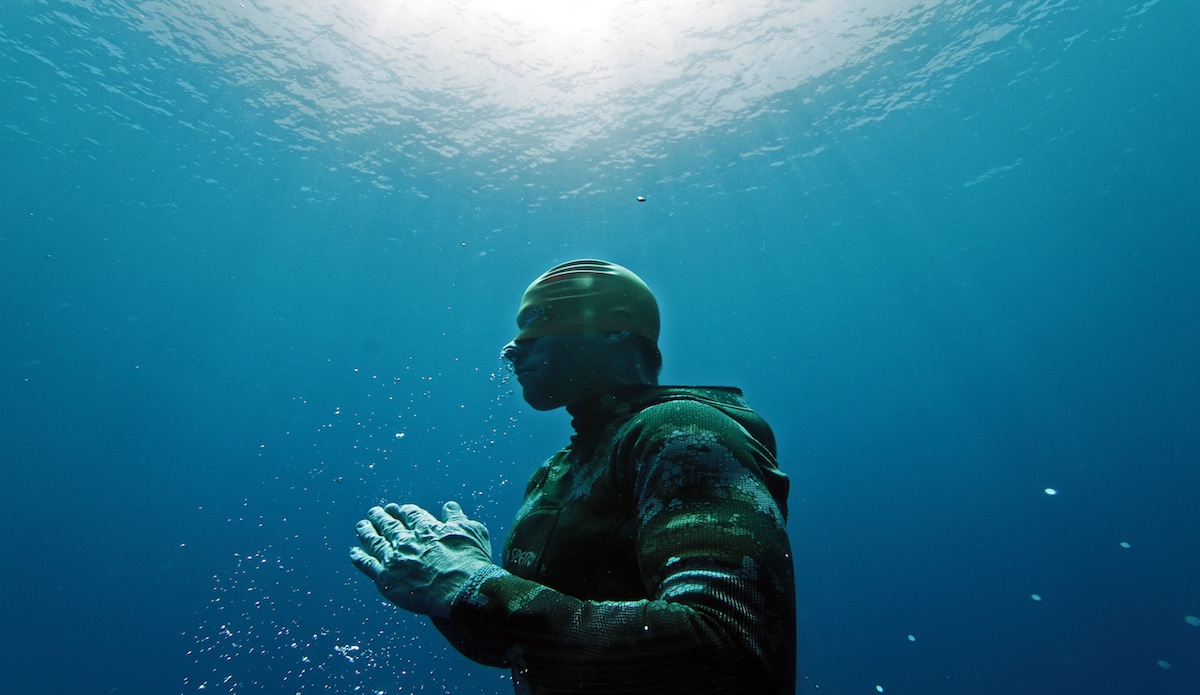
Blindfolded ascension to the surface from 66 feet. Photo: Anthony Dooley
-
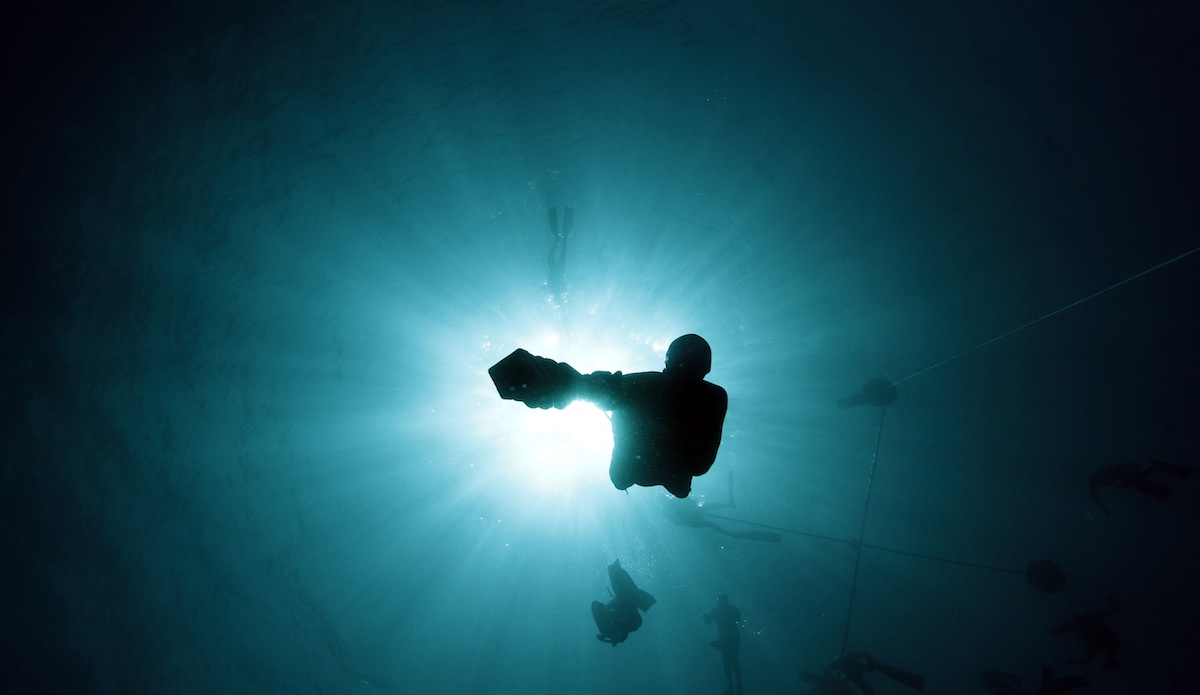
Something about this is so peaceful. There is a silence under the water that is beautiful. Even when being pulled to the depths by a free weight. Photo: Anthony Dooley
-
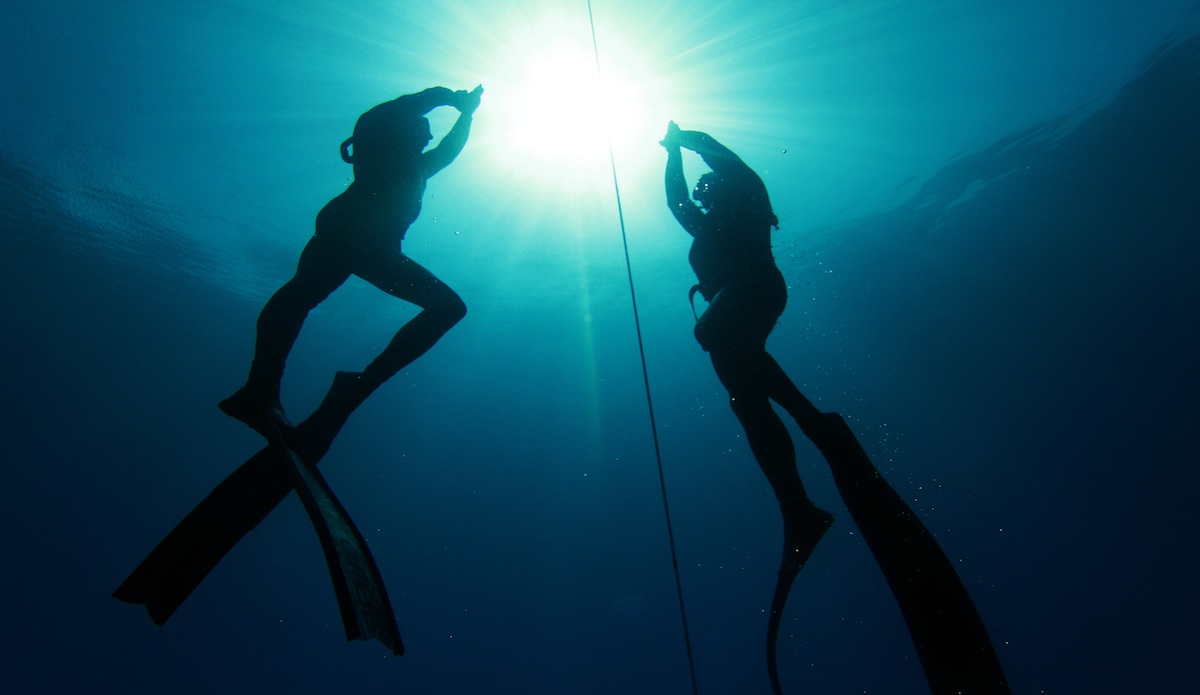
The guiding light to the surface. Photo: Anthony Dooley
Despite the assumption, the trigger to breathe has little to do with lack of oxygen. It is actually caused by high levels of carbon dioxide combined with anxiety and rapid heart beat. Essentially, if you can train your body to extend that urge to breathe, to move past needing to take a breath, you could stay under water longer, safer and more confidently. What would that do for you? As a diver? As a surfer? Maybe that next big wave doesn’t seem so intimidating after all.
The Waterman’s Survival Extended (WSE) course offered by Freediving Instructors International (FII) is a three-day course covering academics, open water training, depth drills and pool exercises, to provide a better understanding of blackouts, drowning and breath holds. Throughout the course, you are trained in proper water safety and technique to confidently dive depths up to 66 feet and complete a breath hold of up to three minutes. Past students of the course include professional big wave surfers like Garrett McNamara, who states, “I recommend the F.I.I. Waterman Survival course to anyone who wants to enter the water. If you are engaging in some heavy sport, that’s in the water, then it is essential. Do yourself a favor — take the course.”
The photo series from photographer and FII Waterman Survival trained waterman Anthony Dooley offers a peek into the WSE course just completed in Rincón, Puerto Rico this May. While I only made it through day one for pool freediver certification, I commend all the waterman in the course. Well done boys.
All photographs taken at Rincón, Puerto Rico by Anthony Dooley. Follow him on Instagram.
For more information about classes in Puerto Rico and the US, please contact FII Instructor Joe Sheridan by visiting his website at www.watermansurvival.com.