Merino wool is pretty awesome. Grown by Merino sheep, what distinguishes it from regular wool is its incredible softness and fine fibers that allow it to be woven into a thinner material than other types of wool. Like any wool, it helps you regulate body temperature by insulating against cold and allowing sweat to evaporate quickly – doing a better job of it than polyester or nylon fabrics. These aspects make one of, if not the best materials for producing baselayers, especially baselayers for active pursuits like skiing and snowboarding where breathable insulation is so critical to keeping warm and dry.
This season I spent some time in the mountains wearing some of the top-selling Merino-wool baselayers on the market to see what all the hype is about. In short, I’ve never been so damn comfortable while skiing in my life – a good baselayer can make a world of difference in keeping you warm, but not too warm, while out on the slopes, whether you’re on the resort or exploring the backcountry. Here are my favorites.
The Best Merino Wool Baselayers
Patagonia Capeline Air
Smartwool Merino 250 Baselayer
Odlo Natural + Kinship Merino Wool
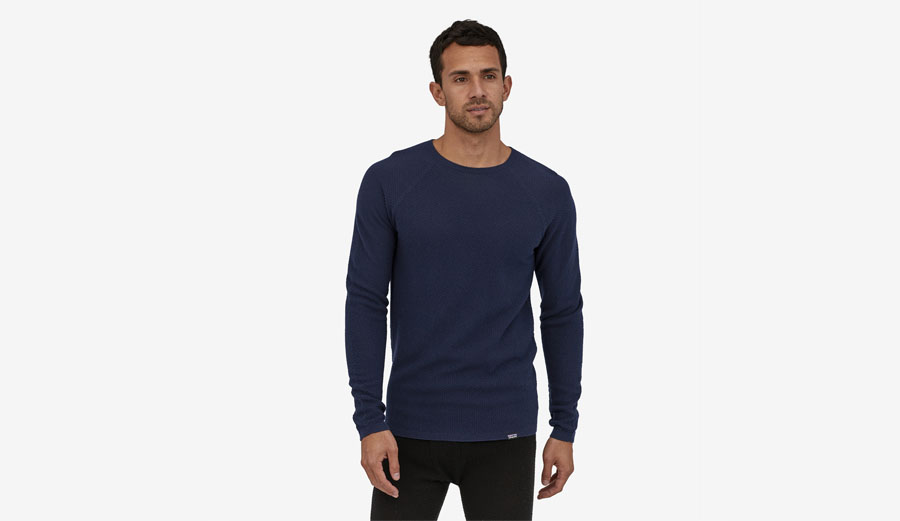
Material: 51% Merino, 49% recycled polyester.
Warmth: 4
Fit: 3
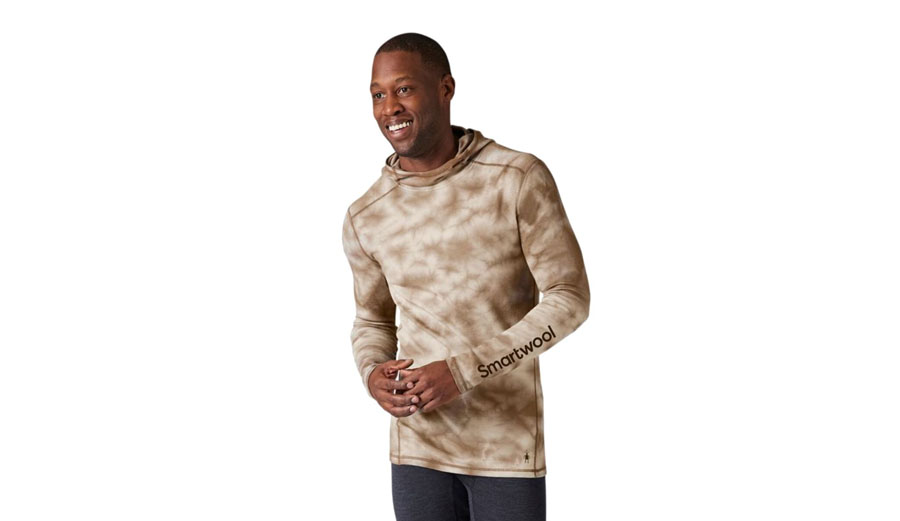
Material: 100% Merino
Warmth: 4
Fit: 3
Smartwool has been deep in the Merino game for a while now, and it shows. Not only are they one of the most recognizable names in baselayers, but they make some of the best products. The Smartwool Classic Thermal is a fantastic and super-versatile baselayer option for the slopes. With a slim but not overly tight fit, and warm, 250-weight Merino wool, this base layer is one of the best you can get your hands on, staying extremely versatile for a range of applications – anything from skiing to lounging by the campfire. I tried it out with a hood and the plant-based dye wash. I love the plant-based dye for a couple reasons – it has a fun tie-dye feel, is eco-friendly, and, thanks to the random pattern, hides the stains that I’ve somehow already gotten on it. The integrated hood is also awesome for a bit of extra warmth on your head and neck when you need it.
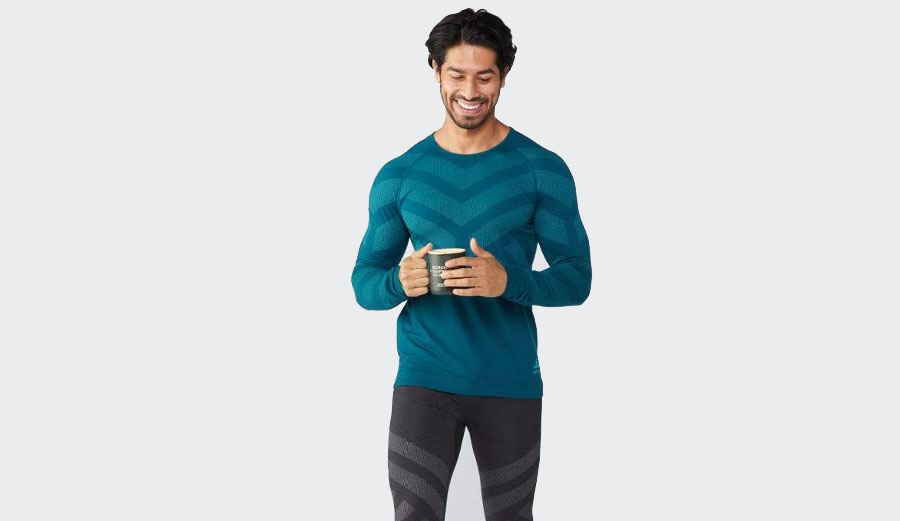
Material: 52% Merino, 48% synthetic blend.
Warmth: 3.5
Fit: 1.5
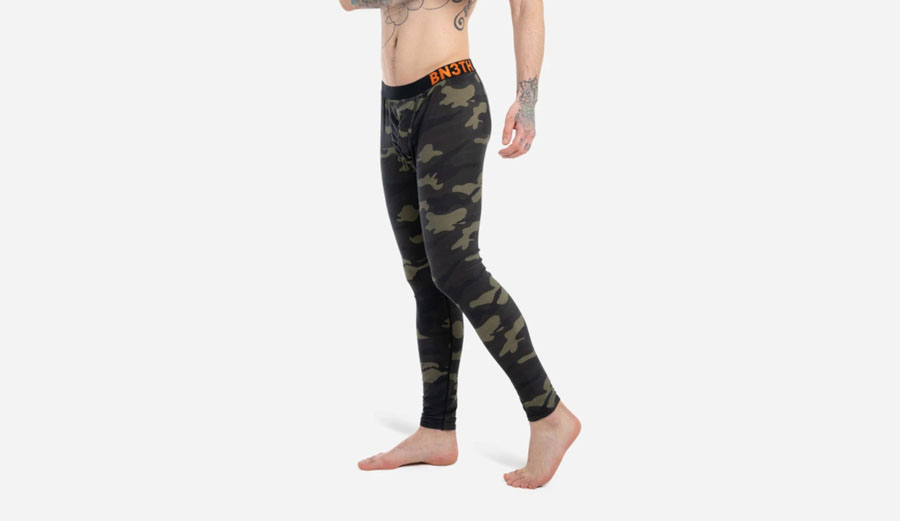
Material: 83% Merino, 17% synthetic blend.
Warmth: 2
Fit: 2
Material: 55% Merino, 45% synthetic blend.
Warmth: 3
Fit: 3.5
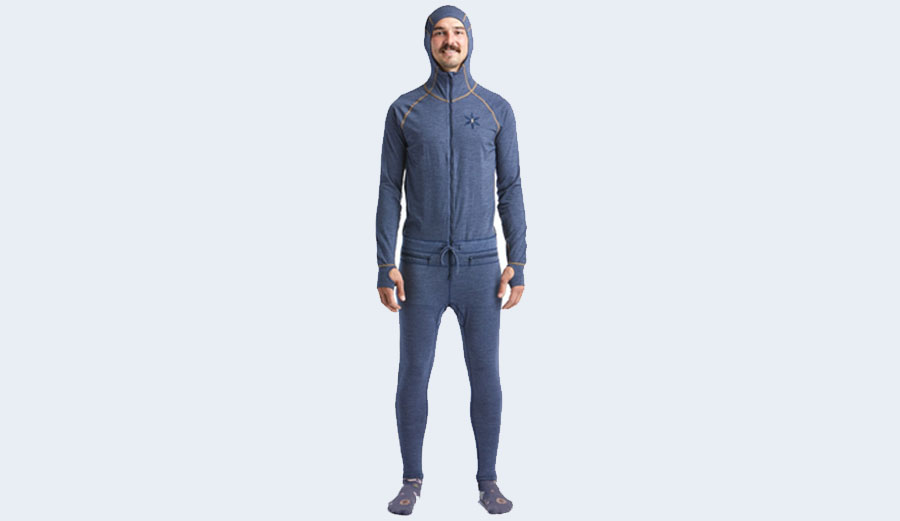
I’d already researched the Airblaster Ninja Suit, a baselayer that gives head-to toe coverage with a one-piece design, so I was stoked to give this Merino version a shot. The garment is cozy but not super heavy, made with a thin Merino-blend fabric that is quite breathable. The fit is a bit roomier than most, cutting against the warmth factor, but with a head-to-toe design, a bit more breathability is great for all but the coldest of conditions. The hood is a massive plus, as are the thumb loops that help keep everything where it should be.
In all honesty though, the bathroom sitch is a pain. The front zip extends far enough for a standing number one for guys, although you do have the drawstring waistband to deal with, which can be tough when you’re digging through outer and middle layers to reach it. And the number two scenario isn’t much better. I’m one to wear underwear under my baselayer (I know some of you weirdos don’t), and a big fan of bibs for skiing, and so the 350-degree zip that is still connected in the front, combined with inching my elastic underwear waistband over my hiney while I’m also trying to open my bibs and keep them from falling in the toilet is downright frustrating. That being said, the Ninja Suit is incredibly comfortable for lounging around in, and I can imagine would not present the same troubles for bathroom duty if you run snow pants instead of bibs, or take the “long underwear” moniker for baselayers seriously.
What Matters in Choosing a Merino-Wool Baselayer?
Warmth is, of course, top priority. If a baselayer doesn’t keep you warm it’s not doing its job. That being said, you don’t want it to keep you too warm while you’re puffing up the skin track or crashing through powder. I rated the warmth of each baselayer on a scale of one to five, one being the warmth of a long sleeve cotton t-shirt, and five being almost too warm for active pursuits like skiing and snowboarding.
Fit is another important aspect, a close-to-the-skin fit will result in a warmer, quicker-wicking and performance-oriented garment than one with a bit more room, but it’s not likely to be a layer you’ll want to lounge around in or wear off the slopes. Fit really comes down to personal preference of how you plan on using the layer. Here I also used a scale of one to five, with one being a tight performance fit, and five being quite roomy like a regular cotton t-shirt.
As far as material goes, all of the items in this list incorporate merino wool. Some are full Merino and some make use of a Merino blend with materials such as polyester or nylon. Synthetic materials are not as breathable and moisture-wicking as Merino, and can catch some extra stink that Merino doesn’t, but they’re cheaper and more durable with a tendency to last a decent bit longer than Merino before developing holes, runs, etc. Pick your poison.
Editor’s Note: For more gear reviews and features on The Inertia, click here.