img_9982
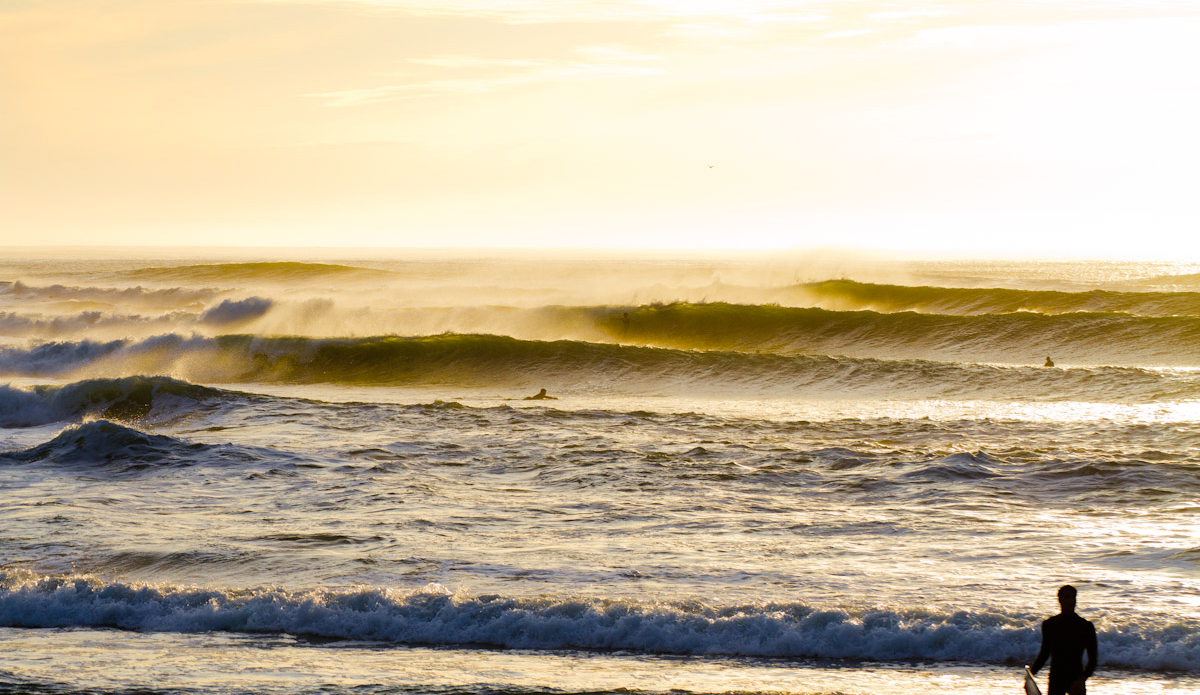
Moving three hours up the west coast, we run into Elands Bay. The point needs a fairly large swell to wrap into the bay and start working properly, but when the elements align, the place cranks. This shot and the next one were taken mid-winter, but looks more like an Indo lineup. Photo: Ian Thurtell
Cape Town… you’ve probably heard of it. After all, it is one of top top cities of the world — home to Robben Island, Nelson Mandela, Table Mountain, the world renowned beaches of Clifton and Camps Bay, and if you happened to have watched any of the National Geographic channel, I’m sure you’ve also heard a thing or two about our Great White Shark population. Anyway, I’m lucky enough to call this great city my home.
And in Cape Town, we surfers are particularly lucky. We have the Cape Peninsular with its east and west facing beaches, which means that on any given day of the year, we only need to drive two hours to find ridable waves with an offshore wind. To our north we have the desert-like west coast, which is littered with uncrowded lineups, and then to the east we have the warmer water of classic point breaks like Jeffreys Bay.
Thus, with surfers being so lucky, being a surf photographer in Cape Town area is incredibly inspiring. The light we get is often super crisp, and the ocean color ranges from wintery brown tubes to light blues and greens come summer. The variety in our breaks is also a blessing, When the spots are working, I could shoot anything from a world-renowned big wave or a physco slab, to a wedging beachbreak or protected cove. And when the swell is maxing, all this is a mere 10 minutes away!
To see more of Ian Thurtell’s work, be sure to visit his website and don’t forget to follow him on Instagram.