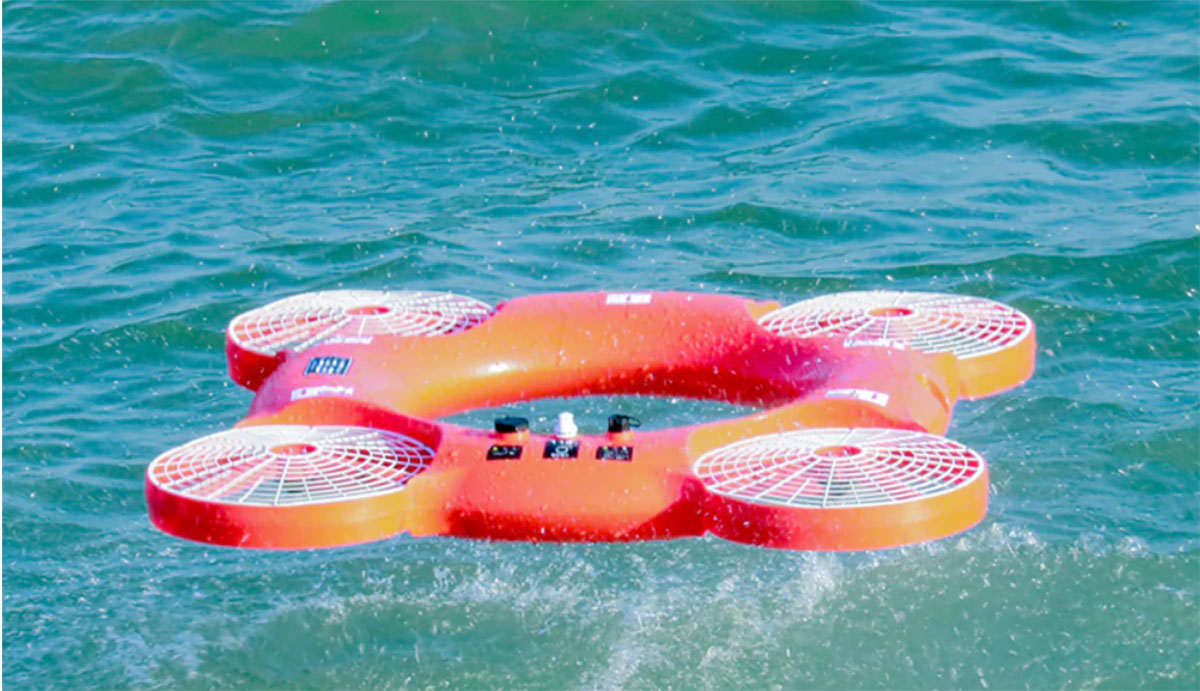
Every now and then, an invention comes around that seems so obvious it’s hard to believe it hasn’t been invented already. The TY-3R, although poorly named, is one of those. Flying life preservers are here.
Made by a Chinese company called Didiok Makings, the TY-3R is a relatively simply device. In short, it’s basically a life-ring attached to a few drones. According to the World Health Organization, somewhere in the vicinity of 236,000 people drown each year, making it the third-leading cause of unintentional injury death. Those deaths, of course, include people who drowned in places where the TY-3R would not have been deployed.
Would-be rescuers can use the drone when they see a swimmer in distress. They fly the drone to the victim, then is used as a floatation device. According to Didiok Makings, it can be used by two adults simultaneously.
It is also outfitted with a camera, both for the use of the drone pilot and to relay information to rescuers about the victim’s condition. As well, it has a beacon that can be used to hail rescuers if they lose sight of the drone.
It’s also relatively light, weighing in at a little under 11 pounds. It can’t fly for long, though — about 10 minutes — but it is water resistant and will still function as a floatation device if the electronics aboard fail.
It’s a pricey piece of equipment, selling for $11,803.00 on the Didiok Makings website, but for beach lifeguard stations around the world, there might be some room in city budgets to employ a few of these.